Paros
A more affordable alternative to Mykonos — great beaches, lively but not overwhelming nightlife.
Highlights
Beaches
Sights
Suggested 5-day itinerary
Where to stay in Paros
Paros splits neatly in two: Parikia is where you arrive and where the buses start, Naoussa is where you eat. Which one you sleep in shapes the trip more than anything else.
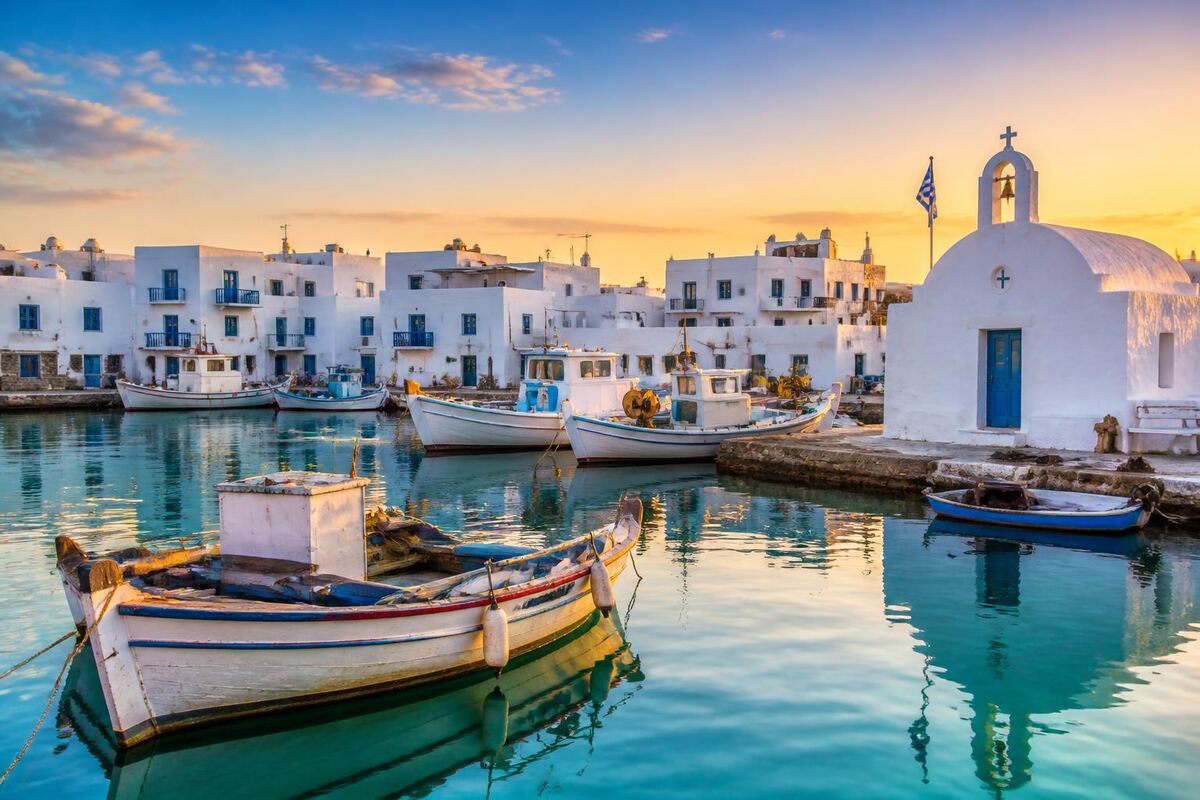
- Parikia — the port and the capital. You step off the ferry into it, every bus on the island starts here, and it is the cheaper of the two towns for the same standard. Behind the waterfront there is a genuine old quarter with a Venetian castle built out of recycled ancient marble. Best if you have no car.
- Naoussa — a fishing village that became the smart end of the island without quite losing the harbour. The best restaurants and the late bars are here, along with a half-sunken Venetian fort you can walk out to. Also the most expensive place to sleep on Paros.
- Piso Livadi, Logaras and Drios — the east coast, low-rise and family-shaped, with small sandy bays and far fewer people. You will want a car or the bus timetable.
- Golden Beach and New Golden Beach — the windsurf and kitesurf end. People come here for the meltemi rather than in spite of it, and the accommodation is built around that.
- Lefkes — the old capital, up in the hills and noticeably cooler in August. Marble lanes, almost no traffic, and the start of the Byzantine footpath. A different holiday from the coast, and you need a car.
- Aliki — quiet, southern, next to the airport but not troubled by it, with a couple of good fish tavernas on the water.
The beaches
Paros has the widest range of any island this size: sculpted rock in the north, long sand on the east, and clay you can bathe in on the south.
- Kolymbithres — the one on every postcard. Weathered granite worn into smooth shapes, forming a run of tiny coves. Reachable by road or by the little boat across the bay from Naoussa, which is the better arrival.
- Monastiri — next door inside Paros Park, organised, with a monastery behind it and calm water.
- Santa Maria — sandy, organised, with watersports and the busiest beach bars on the island.
- Golden Beach, Chrissi Akti — nearly a kilometre of sand on the east coast and a long-standing windsurfing competition venue. Excellent for boards, exposed if you wanted stillness.
- New Golden Beach, Tserdakia — next along, and the kitesurfing one.
- Kalogeros — a clay cliff that people smear on themselves before swimming it off. Unusual, and worth the detour once.
- Faragas — south coast, sheltered, and the calmest option when the meltemi is up.
- Lageri — dunes and no facilities, north of Naoussa, reached on foot or by boat. The quiet one.
A useful rule when the wind blows: the north and east coasts take the meltemi head-on, the south coast around Aliki and Faragas stays swimmable.
Beyond the beaches
- Panagia Ekatontapyliani in Parikia — the Church of a Hundred Doors, founded in the fourth century and one of the oldest continuously used churches in Greece. Free, and five minutes from the port.
- The Byzantine road — a marble-paved path from Lefkes down to Prodromos, about an hour on foot and downhill in that direction. Genuinely old, and the best short walk on the island.
- The ancient marble quarries at Marathi — Parian marble was the finest in the ancient world and was cut here. The tunnels are unlit and unmanaged, so take a torch and sensible shoes, or just look from the entrance.
- Paros Park at Ai Yannis Detis — walking trails on a headland, a lighthouse, a chapel and an open-air cinema in summer.
- Lefkes itself — marble lanes, a Byzantine church and views across to Naxos.
Antiparos, ten minutes away
Paros has a second island attached to it, and most people underuse it.
- Getting across — a small ferry runs from Pounta on the west coast roughly every half hour and takes cars, crossing in about ten minutes. There is also a passenger boat from Parikia in summer, which takes longer.
- The Cave of Antiparos — a large stalactite cave with a long history of visitors carving their names into it, some of them centuries ago. Around 400 steps down and back.
- The village — one main street, quieter and lower-key than anywhere on Paros, and the reason a certain amount of famous money quietly summers here.
- Beaches — Soros and Agios Georgios, the latter looking across at the uninhabited island of Despotiko and its excavated sanctuary.
Getting there and how long to stay
- Ferry from Piraeus — roughly three hours on a fast ferry, four to five on a conventional one. The conventional boats cost noticeably less and handle a meltemi far better.
- Paros as a hub — Naxos is thirty to forty-five minutes away, Mykonos and Ios about the same, Santorini around two hours. Together with Naxos it is the easiest base in the Cyclades for island hopping.
- The airport — domestic flights from Athens of about forty minutes. The terminal was rebuilt fairly recently, but seats are still limited in high season.
- Buses — the network from Parikia is one of the better ones in the Cyclades and reaches Naoussa, the east coast and Pounta frequently in summer.
- Three days covers Parikia, Naoussa and two beaches. Five adds Lefkes, the Byzantine road and Antiparos. A week lets you use it as a base and take a day on Naxos.
Useful tips
- Chrysi Akti is great for windsurfing
- Book a table in Naoussa early in the evening
Where it is
Frequently asked questions
Where should I stay in Paros, Parikia or Naoussa?
What are the best beaches in Paros?
Is Paros or Naxos better?
How do you get to Antiparos?
How many days do you need in Paros?
Is Paros windy?
Plan your trip to Paros
Find the best prices for stays, activities and ferries.
Some links are affiliate links: we may earn a commission on a booking, at no extra cost to you.
Featured in Paros
Selected stays, restaurants and activities.
Have a business in Paros? Feature it here to travellers who are coming.
List your business →Last updated: 23 July 2026 · Spot something out of date? hello@greecedays.com